
Skip to content
Applications

Neurology

Stochastic resonance therapy addresses what conventional exercise therapy cannot reach: signal processing itself. Unpredictable stimuli force the nervous system into constant re-evaluation — reflexes, timing and rhythm are reorganised.

Indications

  • 01Parkinson's disease
  • 02Multiple sclerosis
  • 03Stroke / hemiparesis
  • 04Traumatic brain injury
  • 05Spinal lesions
  • 06Amyotrophic lateral sclerosis (ALS)
  • 07Polyneuropathy
  • 08Depression (adjunct)

Therapy goals

  • Steadier gait and greater step confidence
  • Improved reflex control and movement timing
  • Activation of spinal rhythm generators
  • Support of dopamine release

How it works

A proven therapy for neurological conditions.

srt zeptoring® has been established in the treatment of neurological conditions for years. Its effect is based on the Zeptoring® principle: the physical phenomenon of stochastic resonance is used to train neural signal processing and enable lastingly better mobility.

The term zeptoring® derives from the sensors of the nerves — the receptors. Their activity is amplified by the arrhythmic movements of the training plates and the additional noise function, counteracting the degeneration of nerve cells.

This matters most for people with neurodegenerative diseases such as Parkinson's or multiple sclerosis, but also after spinal cord injuries and stroke. These are precisely the movement disorders that make conventional physiotherapy difficult or impossible. Stochastic resonance therapy instead generates new nerve and muscle activity — without major physical effort.

Clinical evidence

Investigated in numerous studies and scientific publications.

Quality made in Germany

Highest standards in precision and reliability for reproducible therapy results.

36 therapy programmes

Versatile in use — one solution for nearly every neurological treatment need.

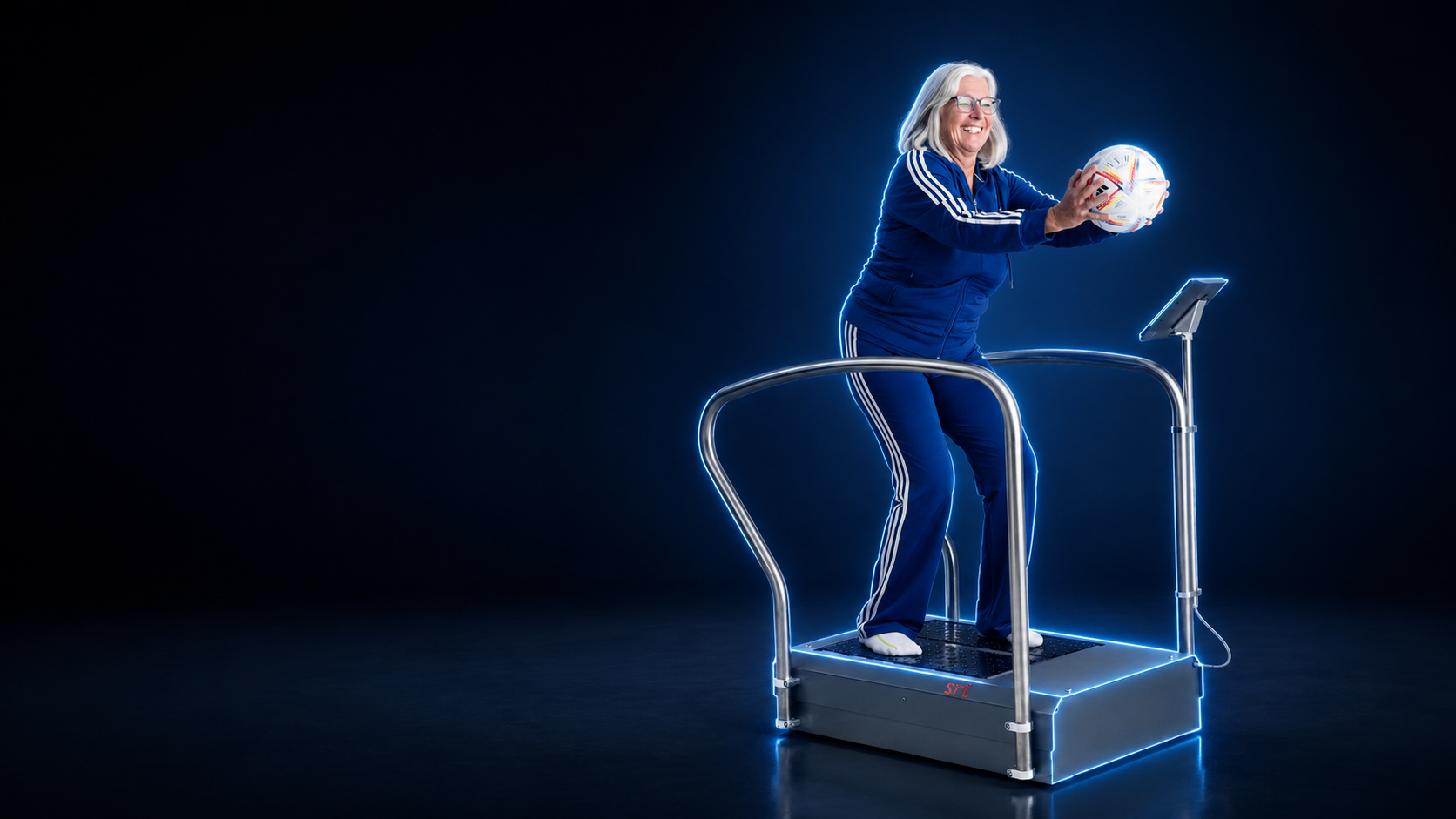
Patient training coordination and balance with a ball on srt zeptoring®

SRT ZEPTORING®

Activate receptors instead of exhausting muscles — just a few minutes per session.

Therapy goals in neurological conditions

Targeted stimulation with unpredictable stimuli measurably supports:

  • Improved balance
  • Better coordination and proprioception
  • Spasticity management
  • Pain reduction
  • Fall prevention
  • Neuroprotection
  • Improved reflex control
  • Formation and reactivation of neural networks
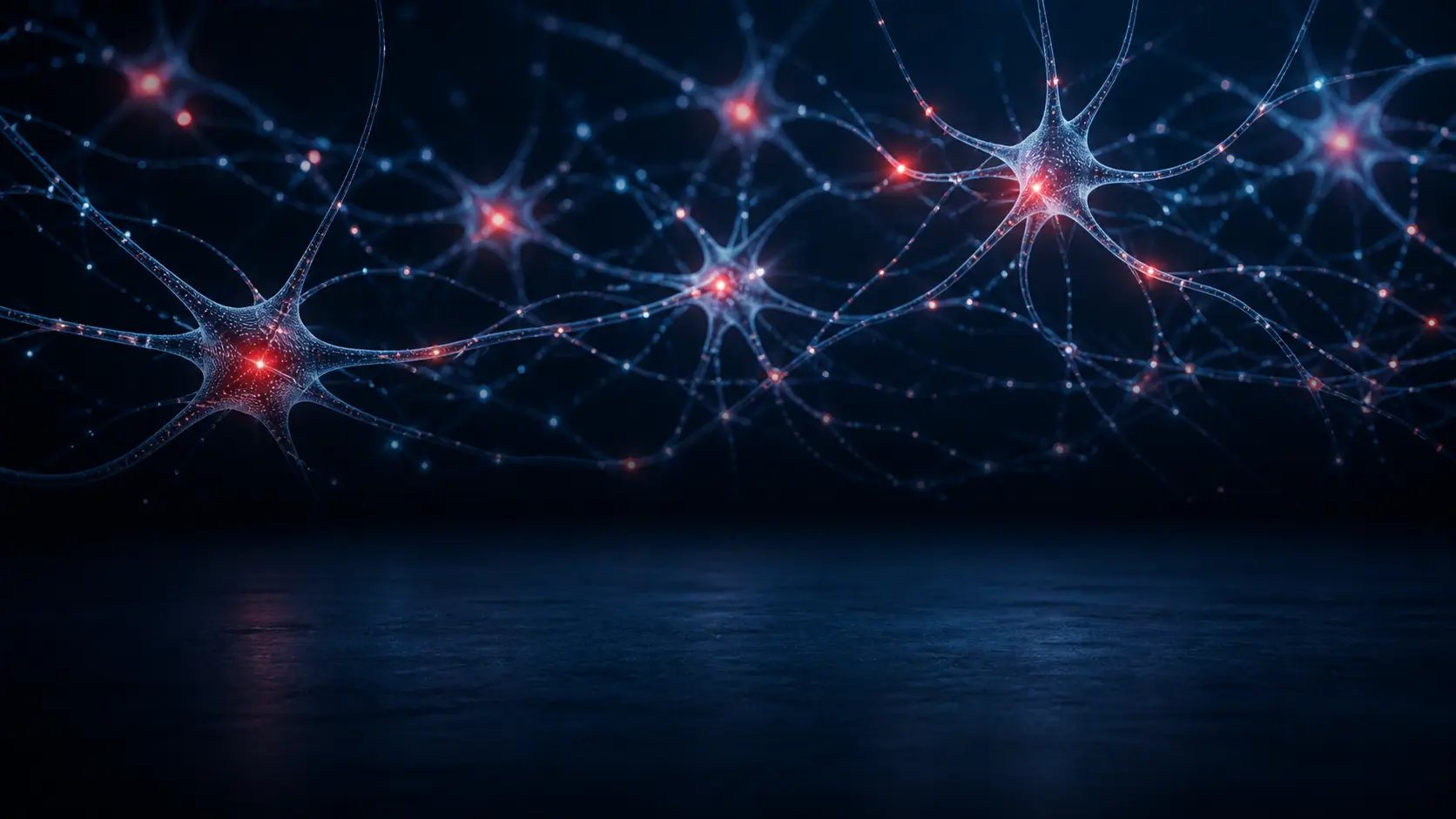
Visualisation of neural networks reactivated by peripheral stimulation

Used clinically for

  • Parkinson's disease
  • MS remitting
  • MS relapsing
  • Neuropathy
  • Sudeck's atrophy (CRPS)
  • ALS
  • Traumatic brain injury / pareses
  • Stroke
  • Restless legs
  • Ataxia

Indications in detail

What happens in practice — condition by condition.

01

Parkinson's disease

In Parkinson's disease, stochastic resonance therapy acts partly through the release of dopamine and other neurotrophic substances. The key point: the regulatory mechanism of brain metabolism is not deceived, because the body's own dopamine is released.

In long-term therapy this means dopamine production is not exhausted as quickly. Reducing medication can also reduce feared side effects.

Observed effects compared with conventional therapy

  • Reduction of rigor and tremor
  • Improved gait and balance
  • Reduction of brady- and akinesia
  • Markedly greater movement confidence and quality of life
24%

reduced rigor

25%

reduced tremor

02

Multiple sclerosis

Multiple sclerosis presents very differently from patient to patient, which is explained by the pathogenesis of the disease. Treatment therefore always has to be tailored individually by a physician.

Quality of life can be improved sustainably with stochastic resonance therapy — particularly through better motor function and reactivity. Neural networks are newly formed and reactivated.

Observed effects compared with conventional therapy

  • Improved balance
  • Improved reflex control
  • Improved walking ability
  • Fall prevention
  • Neuroprotection
  • Improved function of neural cell assemblies
27%

better balance

03

Stroke

Reduced walking ability, impaired balance regulation and restricted mobility affect quality of life. Pareses additionally make rehabilitation programmes hard to carry out.

Muscular activation is a central feature of effective motor training stimuli — and exactly that is prevented or limited by pareses. As a result, neurodegenerative processes appear in both the peripheral and central nervous system within a short time.

Stochastic resonance therapy bypasses the problem of voluntary activation deficits: stimulating different receptor systems triggers reflex muscular activation. This trains neural cell assemblies independently of voluntary motor control.

Observed effects compared with conventional therapy

  • Increase in voluntary muscular activation potential
  • Improved sensory perception
  • Generation of involuntary muscular activation
  • Restoration of walking ability and balance
  • Support for reorganisation of neural cell assemblies
  • Neuroprotection
40%

better activation capacity

04

Traumatic brain injury / pareses

In traumatic brain injury and pareses the therapy acts through stimulation of the receptor systems and the resulting reflex muscular activation. At the same time the cerebellum is reactivated, stimulating neuroplastic processes.

The training can be applied to both central and peripheral disorders of the nervous system.

Observed effects compared with conventional therapy

  • Reflex activation despite limited voluntary motor control
  • Reactivation of the cerebellum
  • Stimulation of neuroplastic processes

05

Neuropathy

Neuropathies have various causes: accompanying diabetes, following toxic environmental influences such as solvents or pesticides — or with no detectable cause at all. All age groups can be affected.

Stochastic resonance therapy improves impaired nerve metabolism by releasing neurotrophic substances and by developing and extending neural networks. A significant improvement in quality of life is possible.

Observed effects compared with conventional therapy

  • Improved sensory perception
  • Improved reflex control
  • Restoration of walking ability
  • Improved balance
  • Fall prevention
34%

better perception

Source: Prof. Dr. rer. nat. Stefan Dalichau, Institute of Applied Prevention and Performance Diagnostics, BG trauma clinic and rehabilitation centre at Bremen Airport: “Vibration training in therapy with particular reference to stochastic resonance” (field observations).

Practice report

When the nervous system learns to respond again

We work daily with people who have Parkinson's, multiple sclerosis or who are recovering from a stroke, and from practice we can say: progress here does not come from strength or willpower alone. It comes from the nervous system and its ability to adapt, reorganise and respond to stimuli.

Many of our patients struggle not only with motor limitations but with uncertainty. Movements are no longer reliably available, steps feel uncoordinated, trust in one's own body is lost. Conventional therapies reach their limits here because they only address the central problem indirectly.

What appealed to us about srt zeptoring® was the principle of targeted unpredictability. The stochastic movement impulses create controlled neural “noise” that challenges the central nervous system without stressing it. Precisely this stimulus seems decisive in breaking up entrenched movement patterns.

In use, patients experience a few minutes of intense neural activation — without active exertion, without overload. Yet we observe changes that matter in everyday life: responses become more stable, movements more coordinated, the sense of control grows. In Parkinson's, freezing episodes occur less often and gait appears smoother.

srt zeptoring® integrates seamlessly into existing neurophysiological concepts — it complements proven approaches rather than replacing them. In hindsight the decision was not a technological one but a therapeutic one: for an approach that does not describe neuroplasticity in theory but makes it usable in practice.

Johannes Späkerstate-certified occupational therapist, practice owner

Frequent questions

Neurology & stochastic resonance

To the study library

How does stochastic resonance therapy work in neurology?

The training plates of srt zeptoring® move arrhythmically and unpredictably. These stimuli activate receptors in muscles, tendons and joints. Reflex responses then train neural cell assemblies independently of voluntary motor control, supporting neuroplasticity, reflex control and balance.

Which neurological indications is srt zeptoring® used for?

The therapy is used clinically for Parkinson's disease, multiple sclerosis (remitting and relapsing), stroke, traumatic brain injury and pareses, polyneuropathy, Sudeck's atrophy (CRPS), ALS, restless legs and ataxia, among others.

Is the therapy possible with severely limited mobility?

Yes. Activation is reflexive and requires no voluntary exertion. Patients who cannot complete a conventional training programme still generate new nerve and muscle activity. Sessions typically last only a few minutes.

Does srt zeptoring® replace existing neurological therapy concepts?

No. Stochastic resonance therapy complements neurophysiological concepts such as Bobath, PNF or gait training. It creates the neural state in which subsequent exercise content works better.

Medical device. Use after consulting a physician. The content shown does not replace medical advice.