Skip to content
Applications

Paediatrics

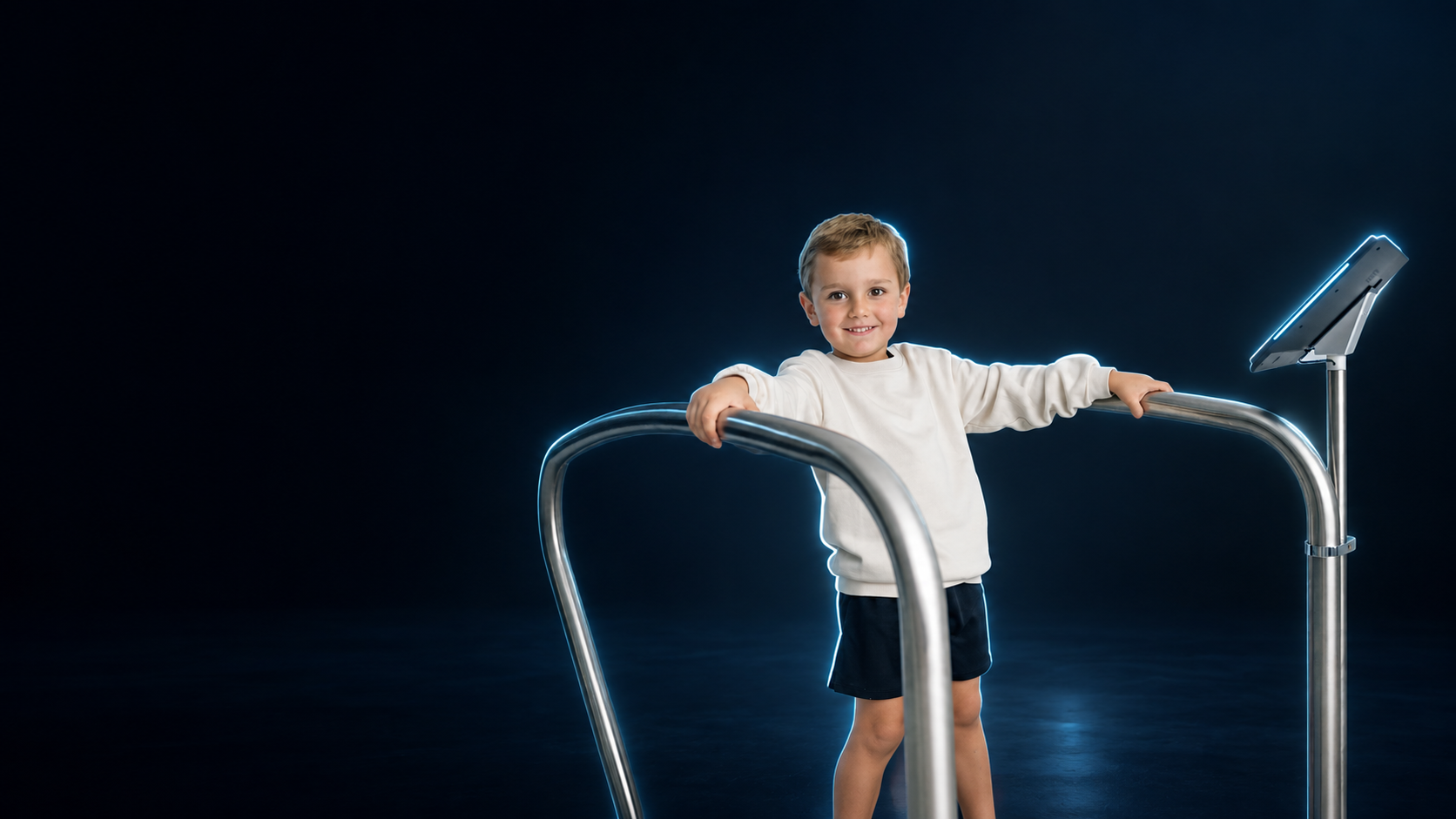
Children experience the therapy as a balance game. That is exactly what makes it effective: high attention, short sessions and no overload of growing structures.

Indications

  • 01Cerebral palsy
  • 02Coordination disorders
  • 03Muscular hypotonia
  • 04Postural weakness
  • 05Developmental delay

Therapy goals

  • Better trunk control and standing stability
  • Higher motivation through a playful approach
  • Support of motor learning

How it works

The engine for children's motor development.

Neuromuscular development in childhood thrives on movement — movement that becomes more complex and precise step by step. What matters most is a very high number of repetitions. Children with neuromuscular deficits cannot achieve that number on their own.

This is exactly where srt zeptoring® supports natural development: unpredictable movement impulses trigger reflex activation without the child having to perform or correct movements consciously. For more than 15 years, therapy programmes tailored precisely to children and toddlers have been developed in close cooperation with paediatric therapy centres and international research.

It is not only the neurological side that needs training — a lack of movement often leaves the muscles themselves too weak. A holistic concept therefore always includes muscle building: srt zeptoring® produces high muscular exertion in a very short time, increasing muscle function and performance.

Clinical evidence

Investigated in numerous studies and scientific publications.

Quality made in Germany

Highest standards in precision and reliability for optimal therapy results.

36 therapy programmes

Versatile in use — one solution for nearly every paediatric treatment need.

Child training safely at the handrail of srt zeptoring® in paediatric therapy

SRT ZEPTORING®

Many repetitions without performance pressure — movement emerges instead of being explained.

Therapy goals for children and adolescents

Neuromuscular stimulation and muscle building work together — producing a range of interlinked therapy effects:

  • Supporting cognitive brain development through neuromuscular activity
  • Training balance and perception
  • Detonisation & spasticity reduction
  • Improved coordination
  • Stretching & contracture reduction
  • Muscle building & muscle function
  • Trunk control & posture
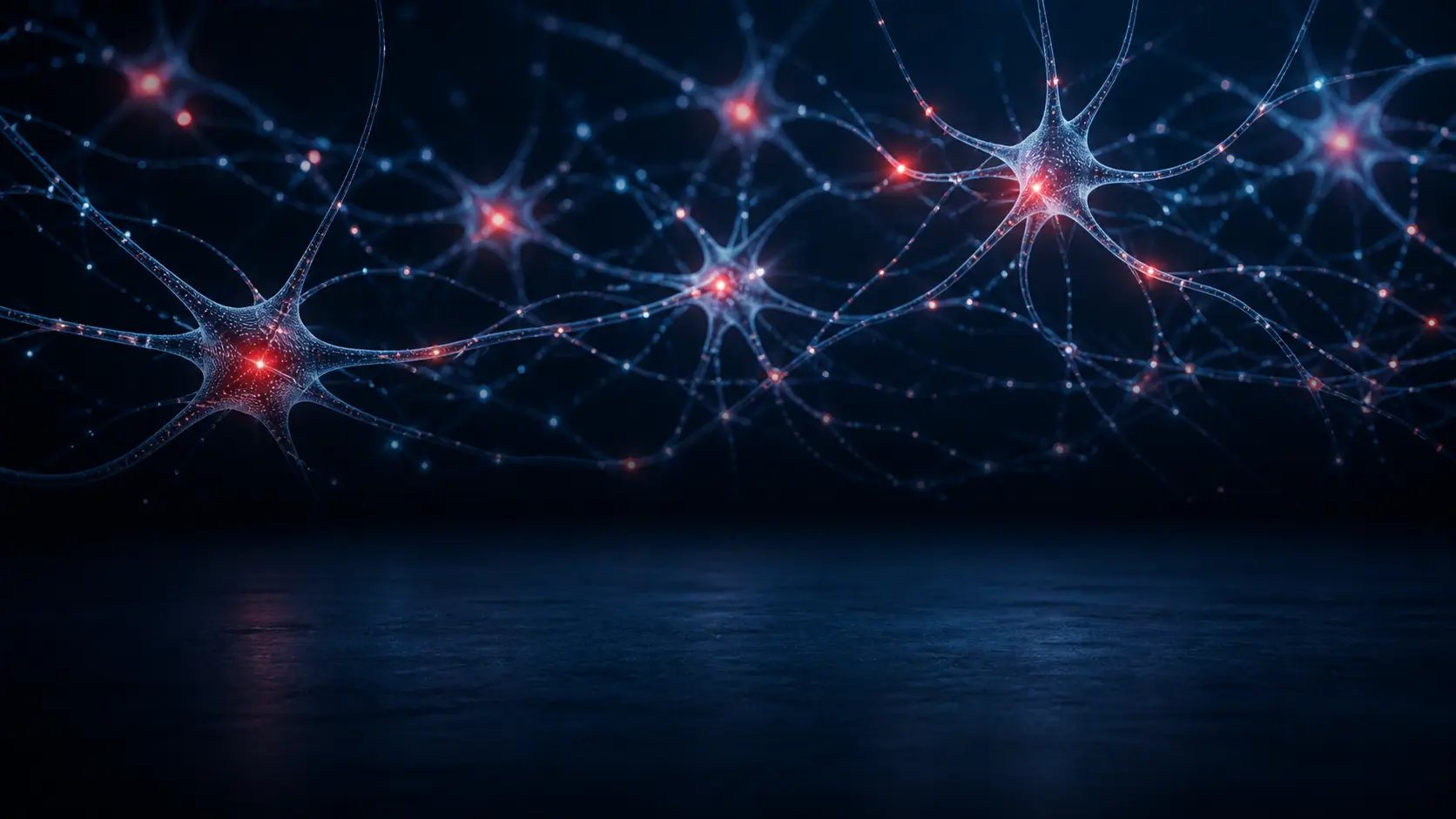
Neural networks as the basis of motor development in children

Used clinically for

  • Hyperactivity
  • Emotional/cognitive deficits
  • Autism
  • Traumatic brain injury / pareses
  • CP spasticity
  • CP athetosis
  • Sensorimotor training

Indications in detail

What happens in practice — indication by indication.

01

Hyperactivity

In hyperactivity, stochastic resonance therapy works mainly through the release of neurotrophic substances, which positively changes brain plasticity. Its particularity: the regulatory mechanism of brain metabolism is stimulated by the body's own released dopamine, improving neural signal transmission.

The programme can be used across the ADHD and autism spectrum as well as in developmental delays or behavioural disorders when the child's behaviour is characterised by hyperactivity.

Observed effects compared with conventional therapy

  • Improved neural signal transmission
  • Calmer behavioural regulation
  • Better ability to concentrate

02

Emotional and cognitive deficits

The effect arises on the one hand from stimulating cortical and subcortical neural networks, on the other from the release of neurotrophic substances. Stochastic resonance therapy is therefore integrated into the medical-therapeutic treatment of emotional and cognitive deficits, especially with diagnoses in the ADHD spectrum.

When integrated into medical-therapeutic treatment, the “emotional/cognitive deficits” programme can achieve considerable effects on speech disorders, concentration, memory, learning capacity and self-confidence as well as motor coordination.

Observed effects compared with conventional therapy

  • Improved concentration and memory
  • Progress with speech disorders
  • More self-confidence
  • Better motor coordination

03

Autism

In autism, stochastic resonance therapy presumably works through the release of neurotrophic substances, positively changing brain plasticity — especially in the basal ganglia. The regulatory mechanism of brain metabolism is stimulated by the body's own dopamine and neural signal transmission improves.

The therapy should be embedded in accompanying medical-therapeutic treatment addressing the patient socially and motorically.

Observed effects compared with conventional therapy

  • Reduction of emotional disorders and aggression
  • Less psychomotor over-excitability
  • Sleeping through the night
  • Better concentration and speech ability
  • Improved muscle tone regulation and movement precision

04

Traumatic brain injury and pareses

Here stochastic resonance therapy works by stimulating the receptor systems and the reflex muscular activation this triggers. At the same time the cerebellum is reactivated, stimulating neuroplastic processes.

The programme is used in children with central as well as peripheral nervous system disorders. In flaccid or spastic paralysis, alternating use with the “CP spasticity” and “CP athetosis” programmes has proven effective in practice.

Observed effects compared with conventional therapy

  • Reflex muscular activation
  • Stimulation of neuroplastic processes
  • Improved voluntary motor control

05

Infantile cerebral palsy – spasticity

In infantile cerebral palsy with spasticity, stochastic resonance therapy works through multidimensional stimulation in the striatum, where plasticity is improved.

The therapy should precede accompanying medical-therapeutic treatment, in order to move on to gait training and further exercises for learning activities of daily living.

Observed effects compared with conventional therapy

  • Detonisation of the musculature
  • Improved plasticity in the striatum
  • Better basis for gait training

06

Infantile cerebral palsy – athetosis

In athetosis too, the therapy works through multidimensional stimulation in the striatum and the improved plasticity there.

The “athetosis” programme is used in patients with delayed psychomotor development, muscular hypotonia or fluctuating muscle tone, as well as in athetosis or ataxia. Gait training and activities of daily living follow.

Observed effects compared with conventional therapy

  • Stabilisation of muscle tone
  • Calmer movement control
  • Improved trunk control

07

Sensorimotor training

The unpredictable movement impulses address balance, body awareness and neural processing at the same time — without conscious effort and without “right” or “wrong”. That makes the training well tolerated even for children with sensory particularities or attention difficulties.

Because many repetitions are possible in a short time, a strong developmental stimulus arises with low strain — a key advantage over performance-oriented forms of exercise.

Observed effects compared with conventional therapy

  • Better body awareness
  • Confident balance
  • More stable sensory processing

Success story

When therapy does not feel like therapy

Many of the children who come to us have difficulties with balance, coordination or body awareness. Some appear restless, others insecure. Some quickly lose motivation because conventional exercises are too demanding, too monotonous or too performance-oriented for them. Children with attention difficulties or sensory particularities in particular react sensitively to being overwhelmed.

That raised a central question for us: how can we promote motor skills without building pressure? How do we reach the nervous system without constantly correcting the child?

What convinced us about srt zeptoring® was the approach of not explaining movement but letting it emerge. While the children stand on the device, their body reacts automatically to the gentle, changing movement impulses. Balance, coordination and neural processing are addressed at once — without conscious effort, without “right” or “wrong”.

For the children the therapy does not feel like training: they stand, they sense, they react — often quite intuitively. The body learns without the child feeling judged. Movement becomes something natural and relaxed again.

Parents report better body control, more self-confidence and often improved concentration too — not because a symptom was specifically targeted, but because the entire sensory processing stabilises. There is also the emotional component: children like stepping onto the device, it makes them curious. That positive experience often carries beyond the therapy — into school, everyday life and play.

The application is safe, clearly structured and suitable for different age groups. It complements existing therapeutic concepts sensibly without replacing them or making them more complicated. For us the integration was a pedagogical-therapeutic decision: for paediatric therapy that respects the nervous system and lets children organise themselves at their own pace — playfully, safely and sustainably.

Julia BrinkmannOwner, Bewegbar – practice for occupational therapy and prevention

Frequent questions

Paediatrics & stochastic resonance

To the study library

From what age can srt zeptoring® be used with children?

There are dedicated therapy programmes developed together with paediatric therapy centres for children and toddlers. The application is suitable for different age groups; intensity and programme selection are always adapted to the child therapeutically or medically.

Which paediatric indications is stochastic resonance therapy used for?

It is used clinically for hyperactivity, emotional and cognitive deficits, autism, traumatic brain injury and pareses, infantile cerebral palsy with spasticity or athetosis, and in sensorimotor training, among others.

Why does the therapy work in children without active cooperation?

The unpredictable, multidimensional movement impulses trigger reflex muscle activation. The nervous system is thus trained independently of voluntary motor control — the child does not need to understand, perform or correct any exercise.

What goals does therapy pursue in child and adolescent therapy?

Supporting cognitive development, training balance and perception, detonisation and spasticity reduction, improved coordination, stretching and contracture reduction as well as muscle building, trunk control and posture.

Does srt zeptoring® replace existing paediatric therapy?

No. It complements existing occupational, physio- and speech therapy concepts and, through neuromuscular preparation, often creates better conditions for subsequent exercises such as gait training or everyday activities.

Medical device. Use after consulting a physician. The content shown does not replace medical advice.